One house style, a thousand images
The thing that keeps a thousand AI-generated images from reading as slop isn't a better model. It's one art direction, held without mercy.
There's a tell that gives away a machine-made site instantly, and it isn't quality — some generated images are gorgeous. It's variety. A folder of individually-nice pictures that don't agree with each other on light, palette, or line reads as a content farm even when every single image is good. Consistency, not polish, is what looks human. This is the companion to designing the brand before the code and part of the wider build.
Name the look, then refuse to leave it
SoiTarot needed a lot of imagery — the full 78-card tarot deck, twelve zodiac signs, nine numerology numbers, plus marketing art. Generated piecemeal, that's a guaranteed mess. So before generating anything, I locked a single art direction and gave it a name, because a named thing is enforceable in a way that "you know, mystical but tasteful" never is: Engraved Celestial Etching — deep navy, antique gold linework, lavender and ivory, the grain of an old astronomical plate.
The palette was the non-negotiable core, five colours and not a sixth:
Every asset got generated to that one spec in Higgsfield. Same light, same line weight, same restraint. The result is that a card you've never seen still feels like it came from the same deck as the one next to it.
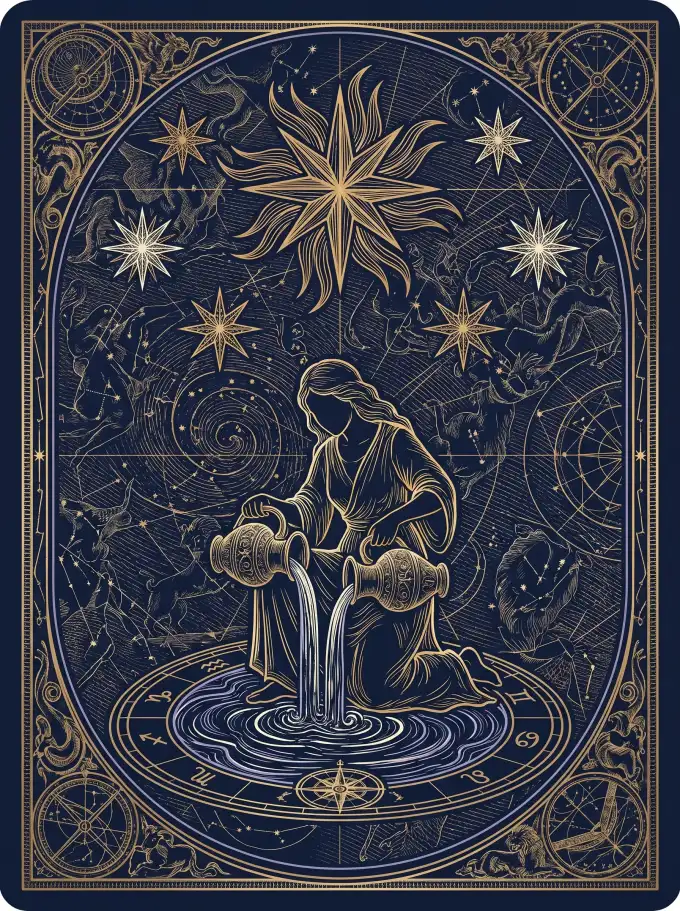
The work is rejection, not generation
Here's what actually took the effort, and it surprised me: generating the images was the easy part. Holding the line was the job. A model will happily hand you a beautiful card that's three degrees off the house style — warmer light, a thicker stroke, a stray colour — and three degrees, multiplied across a thousand assets, is exactly the drift that reads as slop.
So the real craft was curation: rejecting the off-spec outputs, regenerating against the reference, and being willing to throw away something pretty because it didn't belong. The taste lives in the no. A generator removes the cost of making; it does nothing about the cost of judgment, and judgment is the whole game now.
A house style isn't a mood board you consult. It's a standard you reject things against — and the rejecting is the design work that doesn't disappear when the making gets free.
Why it compounds
The payoff isn't only aesthetic. A consistent visual system is reusable — once the spec exists, the thousandth image costs the same as the second, and they all reinforce one brand instead of diluting it. That's the same lesson running through the whole project: the leverage isn't in producing more, it's in deciding the standard once, precisely enough that everything after it inherits it. The palette, the line, the name — those were the expensive hour. The thousand images were the cheap afterthought.
If you want to see the full system the images were held to, it's published in the open — and the content-quality fence that did the same job for words is its own story.